
In this post we will discuss how to grow St. John's Wort, if there is a risk to grow it in the garden, and which plants are best choices to grow in the garden space.
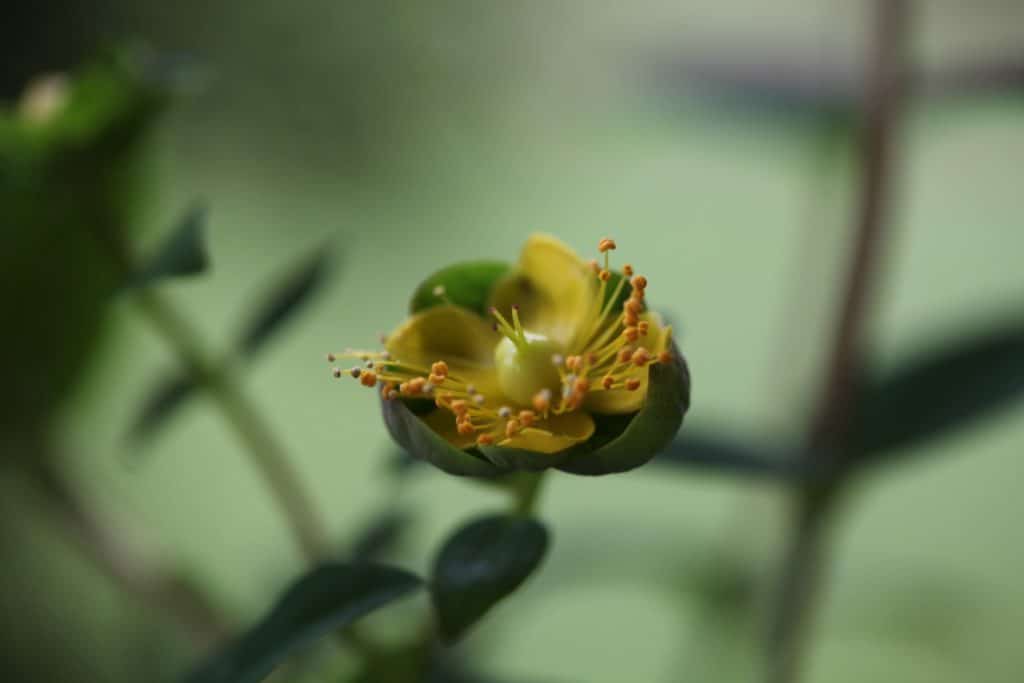
St. John's Wort, from the genus Hypericum, has a number of species. Some species are grown for their medicinal value. Others are grown for their foliage and visual interest in the garden.
All species have the typical buttercup-like flower. Due to the invasive nature of this plant, it is important to carefully consider which species are best to grow in the garden.
Is St. John's Wort Easy To Grow?
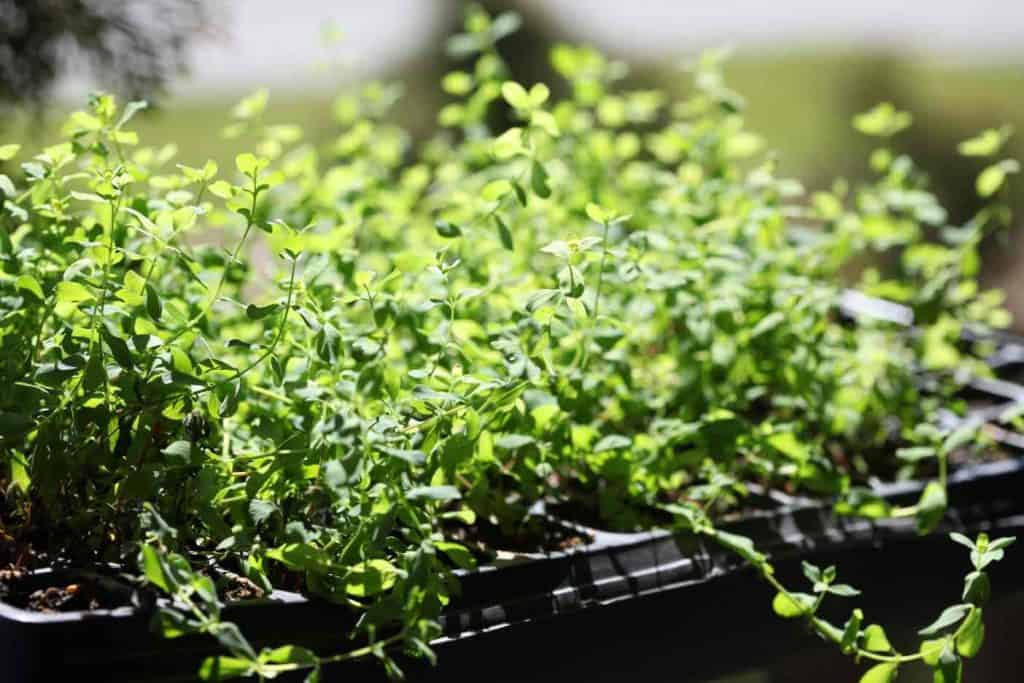
St. John's Wort is very easy to grow. We started Hypericum perforatum from seed indoors this winter. The seeds germinated easily and the seedlings grew very well.
We considered growing a patch of this medicinal herb in our garden this year, using it mainly for visual interest and to bring in the pollinators.
On further investigation, it appears that there may be a risk for planting Hypericum perforatum, due to the tendency to spread to other areas and be ingested by livestock.
Hypericum perforatum- Common St. John's Wort
Hypericum perforatum is the species of Hypericum that contains the medicinal ingredients hyperacin and hyperforin. These phytochemicals have been used by herbalists for centuries, for many medicinal effects.
This plant contains ingredients that are commercially prepared and sold as over the counter antidepressants, which can be used to treat mild to moderate depression.
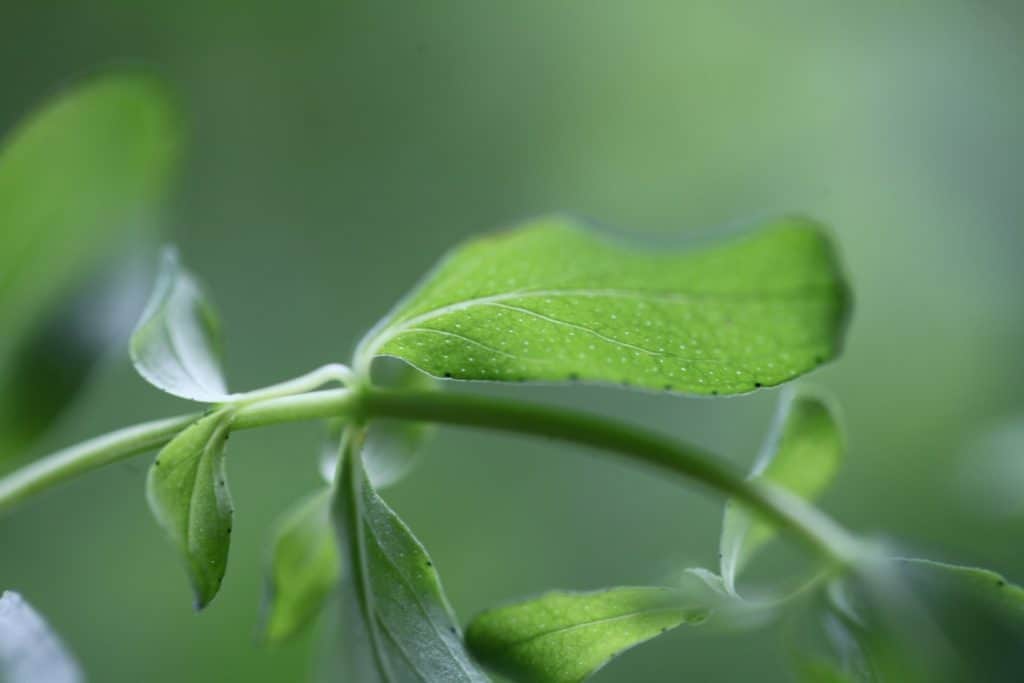
Check to see if your St. John's Wort is the species Hypericum perforatum.
To do this, take a leaf and hold it up to the light.
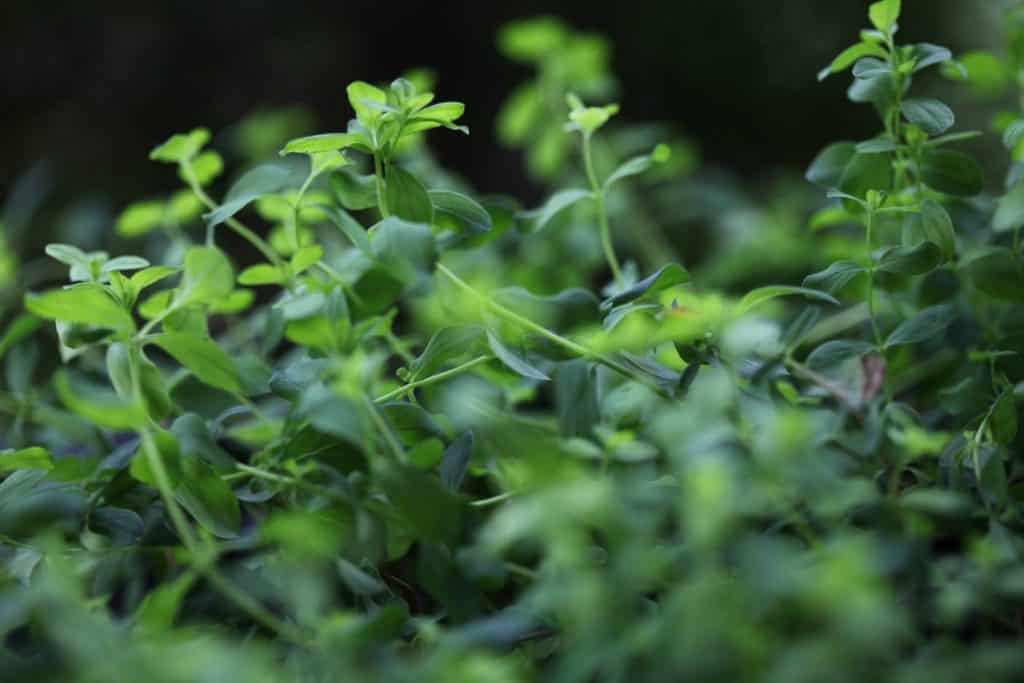
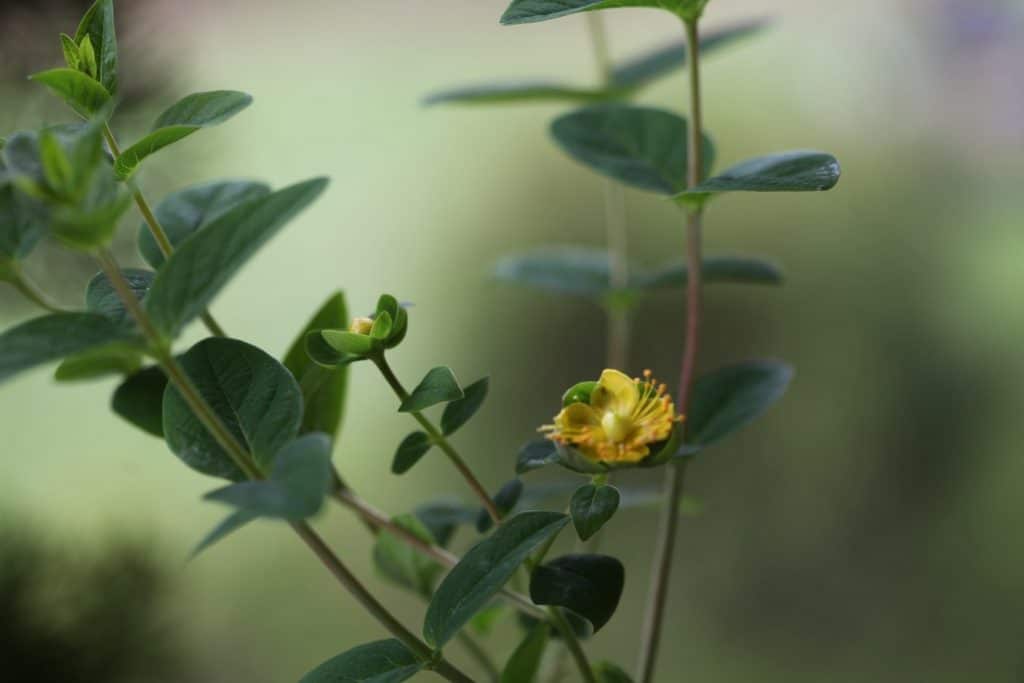
You will seed many tiny perforations all along the leave structure, as in the photo below. This is a photo of one of our two month old Hypericum perforatum seedlings.
To test for the presence of hyperacin, you can squeeze the flower buds. They will emit a reddish purple substance which is the hyperacin, one of the medicinal ingredients in St. John's Wort.
Hypericum perforatum most definitely has value and medicinal benefits, and it's efficacy has been well studied.
If growing this plant, the main issue of concern would be to prevent it from spreading elsewhere, as it has now been identified as a noxious weed in many areas of the world.
Does St. John's Wort Spread?
St.John's Wort spreads easily by reseeding, as well by underground runners.
Hypericum perforatum is a vigorous spreader in many areas. In certain locations it has been identified as an invasive species.
This plant does tend to get away from the garden.
The Hypericum perforatum seeds that we purchased this year were foraged from wild plants in Nova Scotia.
Our main concern for planting the seedlings that we grew is that we have neighbours who have cattle.
Due to the risk of spread of Hypericum perforatum, and possible consumption by the animals, we will not be planting this perennial herb in our garden.
If you consider the phytochemical properties in this plant, it's not difficult to understand how they may cause injury to livestock eating it in large amounts.
There are other species of St. John's Wort that do not have these phytochemicals. These are the plants that we will be growing in our garden.
These species are woody St. John's Wort shrubs with no medicinal value. They can spread as well and will reseed, however the risk is far less.
Does St. John's Wort Die In Winter?
Hypericum perforatum is a herbaceous perennial. It will come back every year.
Other species of St.John's Wort are perennial shrubs, and will come back every year to produce new growth and flower.
There are some species that are semi evergreen, and some that are evergreen. The semi evergreen will lose some of its leaves.
All species will flower on new growth, even the evergreen shrubs. Branches can be trimmed back to the ground in winter or early spring.
Every year the plant will produce new stems which will flower.
Growing St. John's Wort In The Garden
There are several species of St. John's Wort that can be grown safely without concern of risk to animals.
These include popular St. John's Wort shrubs that are commonly grown in the garden, including these three types:
1. Hypericum hidcote
Hypericum hidcote is a fully evergreen species of St. John's Wort. The flowers on this plant are larger, and it does not produce berries.
This plant is very easy to grow, and flowers on young wood. It is low maintenance and deer resistant.
Hardiness zones for Hypericum hidcote are 6 to 9.
2. Hypericum inodorum
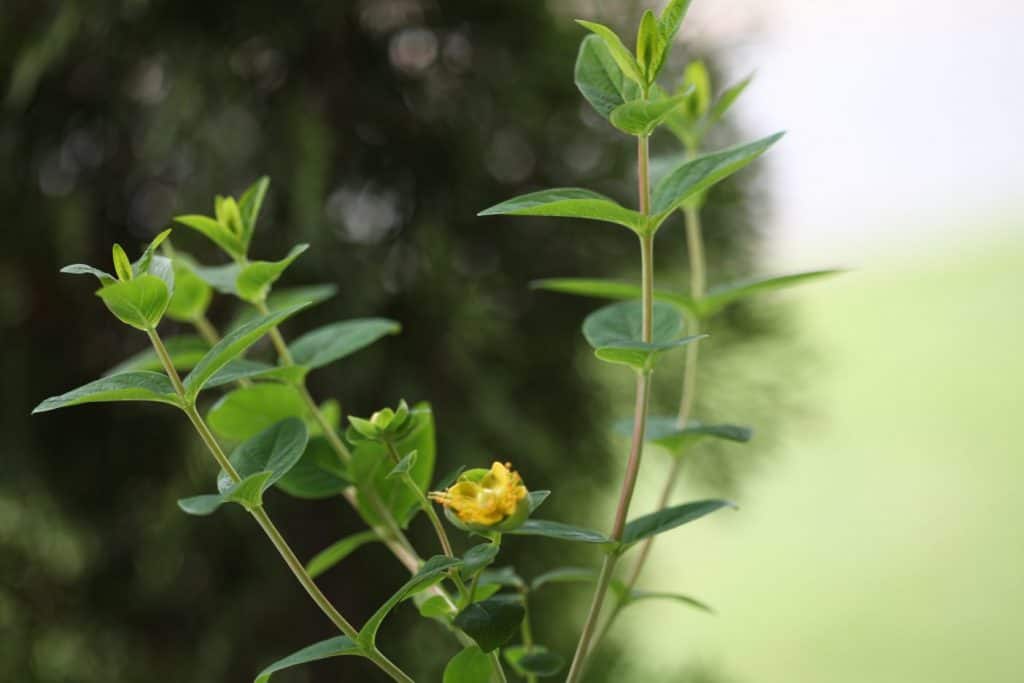
This species of St. John's wort is a semi evergreen shrub. It will flower on young wood, and produces berries after flowering.
This species grows in zones 6 to 9.
This is the plant that we will be growing in our garden. It's a good plant to use for fillers and produces a good cut stem commonly used in the florist industry. Since we are in zone 5b we will offer it a protected spot in the garden.
Hypericum Inodorum will grow in full sun or shade.
It has a tendency to reseed.
3. Hypericum moserianum
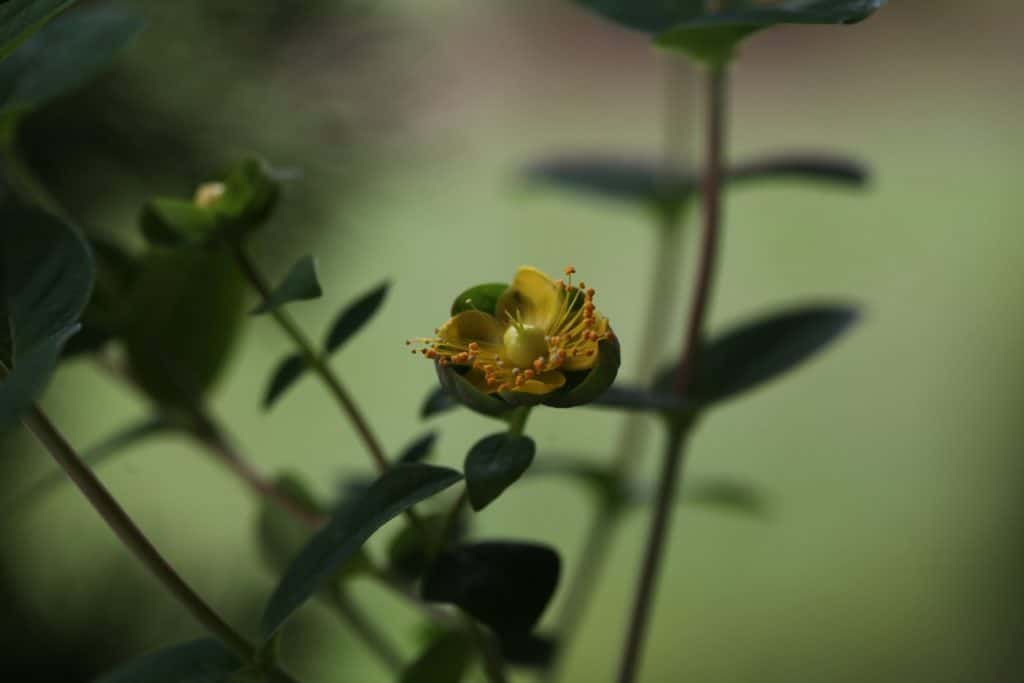
This is another species of St. John's wort that can be grown in the garden. It is a semievergreen shrub which grows in both full sun and shade.
This shrub grows in zones 5b to 9.
Hypericum moserianum is a long blooming plant that blooms over a period of several months.The yellow flowers have red anthers, for a lovely colour combination.
This shrub is deer resistant.
How Long Does A St. John's Plant Live?
St. John's Wort can live up to ten years. Keep in mind that they are prolific re-seeders, so from just the one plant there can be many more produced.
Can You Grow St. John's Wort From Seed?
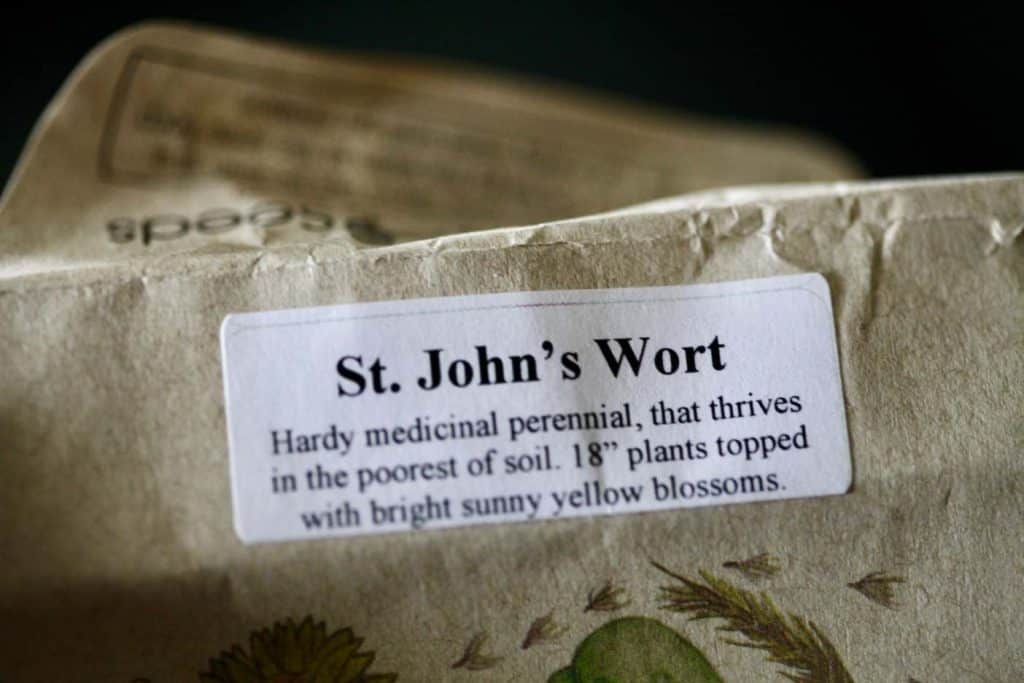
You can grow St. John's wort easily from seed.
We grew hypericum perforatum very easily indoors in cell trays.
How To Grow St. John's Wort From Seed.

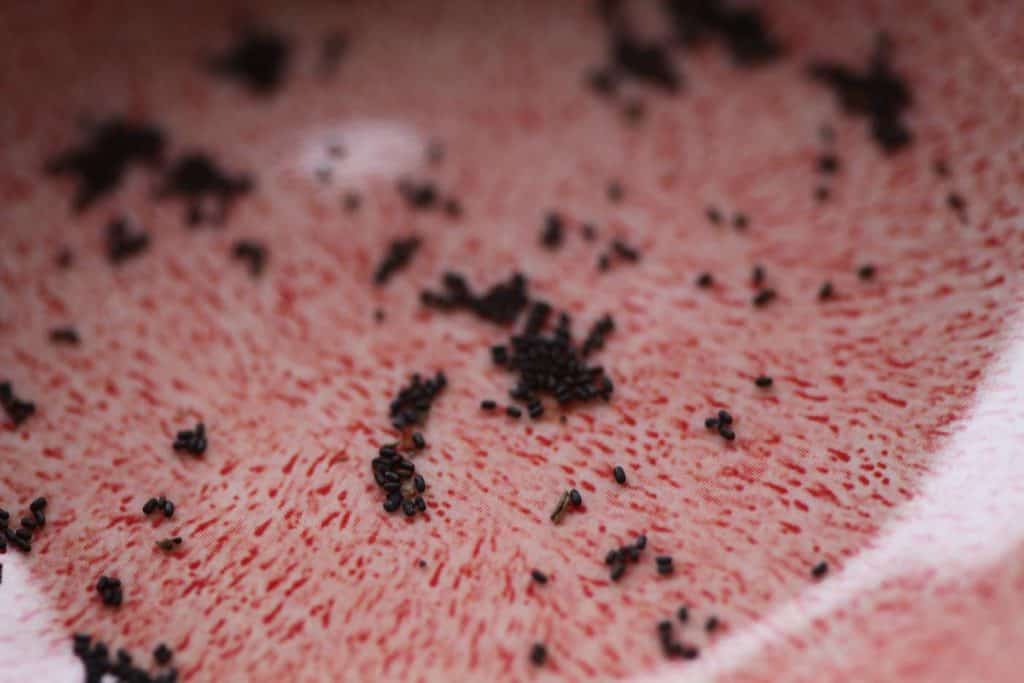
We grew St. John's wort from seeds indoors in late winter.
Here are our methods to start flower seeds indoors.
- Hypericum perforatum seeds were sown into cell trays and placed on a heat mat.
- They were not covered to allow exposure to light for germination.
- The seeds easily germinated within a few weeks.
- The seedlings are hardy and strong. Unfortunately we will not be planting them at our farm due to the risk of spread to our neighbours.
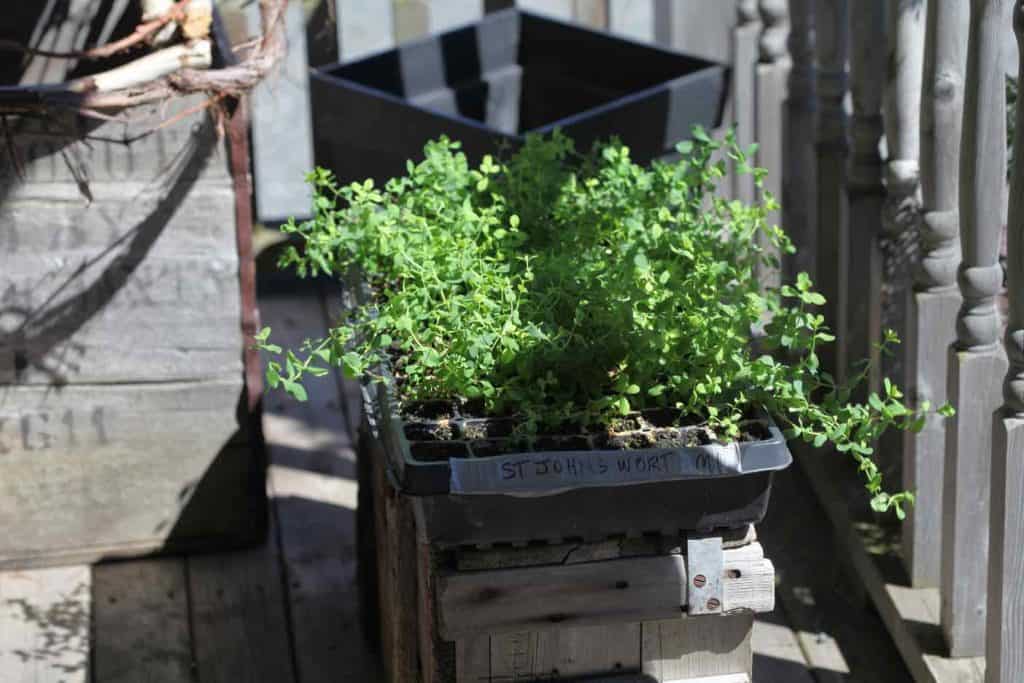
How Long Does It Take To Grow St. John's Wort From Seed?
Hypericum perforatum seeds were planted on March 1. Within two months the seedlings have grown to be approximately 8 inches tall, and certainly ready for planting.
Where Does St. John's Wort Grow?
St. John's Wort is hardy from zones 3 to 10 depending on the species grown.
St. John's Wort will grow in sun or shade. This plant prefers full sun, however it will grow under both conditions. In fact sometimes it will reseed into shady locations and establish itself there.
St. John's Wort prefers well drained soil, and other than this will grow in any soil type, even in low fertility soil.
Does St. John's Wort Need Fertilizer?
St.John's Wort does not require a fertilizer. Mulching around the base of the plant will provide some weed suppression as well as contribute to the soil fertility as the mulch breaks down.
When Should I Cut Back St. John's Wort?
Typical pruning time for St.John's Wort is late winter or early spring. You can cut back all the way to the ground if you wish.
As well, you can cut back St. John's Wort if it is looking untidy or overgrown. It will not harm the plant and the plant will regrow.
Some gardeners choose to cut back their plants early every season to keep the shrub smaller and tidier in appearance.
I hope that you found this post on how to grow St. John's Wort helpful, with consideration on which plants to safely grow, and the risk for spreading of the medicinal species. Any comments and questions are always welcome!
Other Posts You May Like:
PIN IT FOR LATER!


Candice
Great post! So informative!
cheyanne
Thanks very much!